
11 Key Components of Event Management: A Complete Guide
July 30, 2026
Planning an event, whether it’s a corporate conference or a product launch, involves far more than picking a date and booking a venue. Every successful event is built on a set of core building blocks that work together behind the scenes. Understanding the key components of an event helps you plan with more confidence and fewer last-minute surprises.
If you’re planning a corporate event from scratch, our guide on organising a high-performing corporate conference explains the planning process in more detail.
This guide breaks down the essential event management check list every planner should know for your next project.
Why the Key Components of an Event Matter
Every event, no matter its size, depends on the same underlying framework. Skip one of these components and the cracks tend to show, whether that’s a budget overrun, a venue that doesn’t fit your audience, or a program that loses momentum halfway through.
Treating these components as a connected system, rather than a list of separate tasks, is what separates events that feel effortless from ones that feel rushed. Below, we walk through all 11 in the order they typically come together.
The 11 Key Components of Event Management
These event management elements apply across almost every type of event, from small workshops to large-scale conventions.
1. Event Objectives and Goals
Every event needs a clear purpose before any other planning begins. Are you launching a product, building brand awareness, training staff, or celebrating a milestone? Defining this early shapes every decision that follows, from your guest list to your choice of venue, and gives you a clear benchmark to measure success against once the event is over.
For businesses planning a launch event, having clear objectives is especially important. Our guide to planning a successful product launch event covers the key steps in more detail.
2. Budget Planning
A realistic budget sets the boundaries for everything else. It should cover venue costs, production, catering, staffing, marketing and a contingency fund for the unexpected. Planners who build in a buffer of 10 to 15 percent tend to handle surprises with far less stress.
3. Venue Selection
The right venue supports your event’s format, audience size and objectives. Location, accessibility, capacity and technical capabilities such as power supply and internet connectivity all deserve careful thought before signing a contract.
4. Event Timeline and Scheduling
A detailed timeline keeps every task on track, from the first planning meeting to the final teardown. This includes internal deadlines for your team, as well as the run-of-show schedule for the event day itself.
5. Vendor and Supplier Management
Most events rely on a network of vendors, including caterers, AV technicians, decorators and photographers. Strong vendor management means clear contracts, confirmed timelines and a single point of contact to avoid miscommunication on the day. It also pays to negotiate rates and cancellation terms early, so you are not caught out by hidden fees if plans change.
6. Program and Content Design
The program is what your audience actually experiences, whether that’s a keynote lineup, a product reveal or an entertainment schedule. A well-paced program keeps attendees engaged and gives the event a clear beginning, middle and end.
This is one of the reasons many businesses choose to work with a professional corporate event planner who can balance strategy, audience engagement and event execution.
7. Marketing and Promotion
Even the best-planned event needs an audience. Marketing and promotion cover everything from invitations and social media campaigns to press outreach, all aimed at driving awareness and attendance ahead of the date. Spreading this across multiple channels, rather than relying on a single email blast, tends to bring in a stronger and more engaged turnout.
If your goal is measurable business results rather than attendance alone, it’s worth understanding how to increase ROI from corporate events and conferences.
8. Registration and Ticketing
A smooth registration process sets the tone before guests even walk in. This includes managing sign-ups, sending confirmations, and organising a fast, simple check-in system on the day itself.
9. Logistics and On-Site Production
Logistics cover the physical execution of the event, including staging, audio-visual equipment, signage, seating and transport. This is where planning turns into a real, functioning space that your audience will move through. A proper technical run-through before doors open catches most problems while there is still time to fix them.
10. Staffing and Team Coordination
No event runs on its own. You need enough trained staff, from ushers to technical crew, to manage every part of the day. Clear roles and a defined chain of command prevent confusion when something needs a quick decision.
11. Risk Management and Contingency Planning
Weather, technical failures and last-minute cancellations can all disrupt an event. A solid risk management plan identifies potential issues in advance and outlines a backup plan for each one, so your team can respond calmly rather than scrambling. Basic precautions, such as event insurance and a clear emergency procedure, are worth arranging even for smaller events.
Hybrid events require additional contingency planning for both physical and virtual audiences. Read our guide on organising a hybrid event for practical considerations.
How These Components Work Together
None of these 11 components operates in isolation. Your budget shapes your venue options, your venue shapes your logistics, and your objectives influence almost every decision along the way. Planners who map out these connections early tend to spot conflicts, such as a program that has outgrown its timeline, long before they become a problem on event day.
This is also why it helps to revisit the full list more than once during planning, rather than ticking each component off and moving on. A change to one element, like a shrinking budget or a new venue, often has a ripple effect across several of the others.
Using This as Your Event Planning Checklist
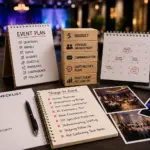
Once you understand these components, you can turn them into a practical event planning checklist for your next project:
- Define your objectives and success measures
- Set a realistic budget with a contingency buffer
- Confirm your venue and technical requirements
- Build a detailed timeline and run-of-show
- Lock in vendors and confirm contracts
- Design a program that matches your audience
- Launch your marketing and promotion plan
- Set up registration and check-in systems
- Finalise logistics and on-site production needs
- Brief your staff on roles and responsibilities
- Prepare a contingency plan for common risks
Working through this list early gives you a clear view of what still needs attention and what is already under control.
Final Thoughts
Knowing the 11 components of a successful event is half the battle but the real difference between a “good” event and an “unforgettable” one lies in flawless execution. And flawless execution is not a theory; it is a discipline.
That discipline is exactly what defines SFK. We are not just consultants or creative designers. We are your commercial execution partners. A team built to operate at the intersection of strategy, structure, and real-world impact. While others hand you a deck and walk away, we roll up our sleeves and work alongside you in the spaces that truly matter: malls, ballrooms, exhibition halls, and every high-traffic venue where your brand meets its audience face-to-face.