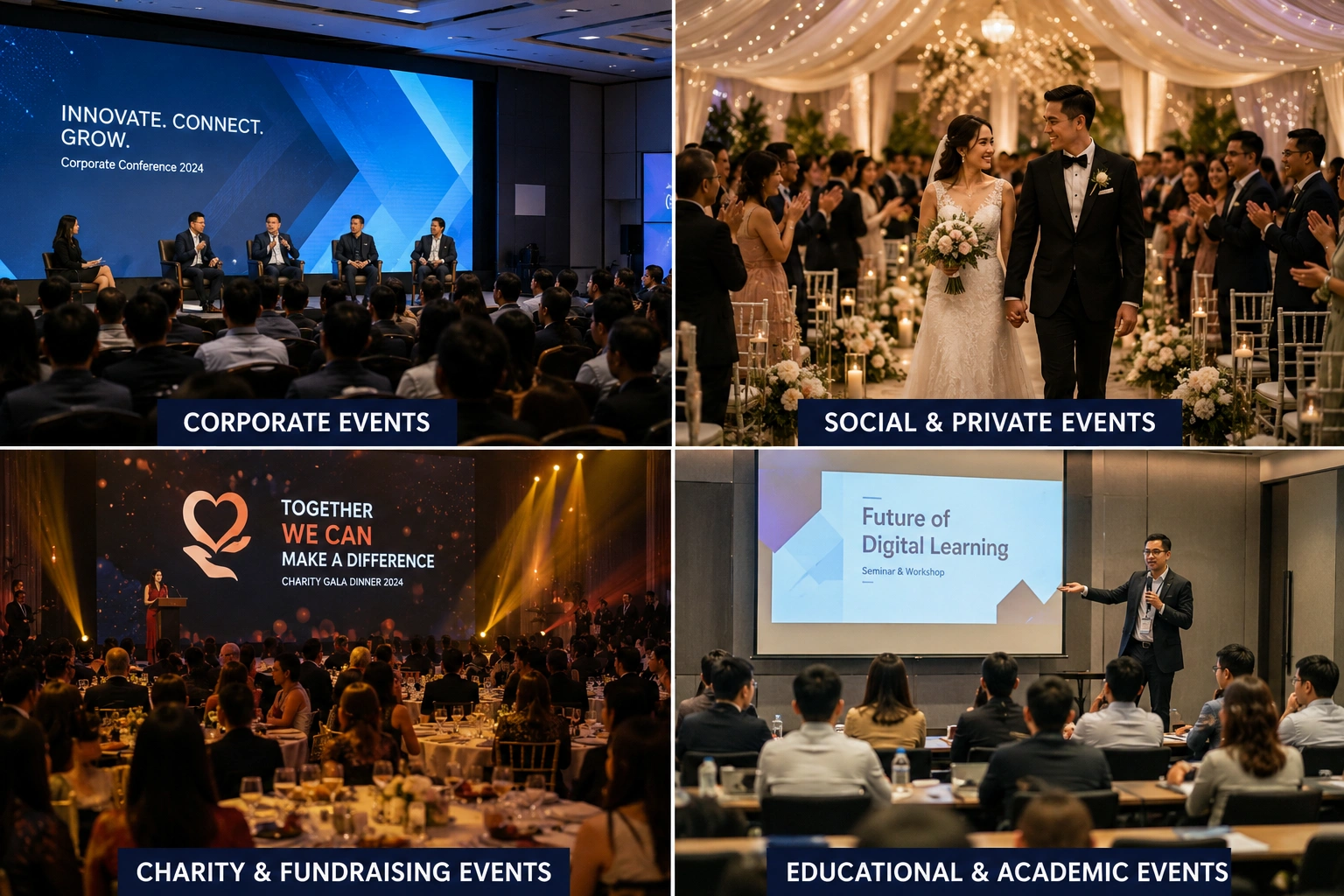
Types of Event Management: 4 Event Categories You Should Know
July 30, 2026
Every event looks different depending on its purpose, audience and setting, but most fall into a handful of broad categories. Understanding the main types of event management helps you choose the right approach, team structure and budget for whatever you’re planning, instead of applying the same process to every project.
Once you’ve identified your event type, understanding the key components of event management makes it easier to plan each stage effectively.
In this guide, we break down each of the four categories and what makes it unique, along with the kind of planning it typically demands.
What Are the Different Types of Events?
Before diving into event management specifically, it helps to step back and look at the types of events themselves. Events generally fall into four broad categories based on their purpose: business-driven, personal, charitable, or educational.
Each category comes with its own goals, audience expectations and planning priorities. A product launch and a family wedding might both need a venue and a run-of-show, but the similarities largely end there, which is why treating them the same way rarely works.
The 4 Main Types of Event Management
1. Corporate Events
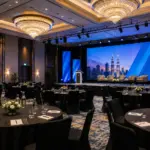
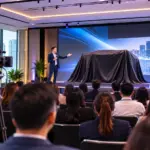
Corporate event planning covers conferences, product launches, trade shows, team-building days and company milestones. These events are usually driven by clear business objectives, such as generating leads, training staff or strengthening a brand’s reputation.
Businesses planning conferences or large corporate gatherings can also benefit from our guide on organising a high-performing corporate conference.
Because corporate events often involve senior stakeholders, tight schedules and measurable outcomes, this category tends to demand a higher level of coordination and reporting than other event types. Budgets are usually tied to a business case, which means planners are expected to show a return on the investment once the event wraps up. Common examples include:
- Product launches and press events
- Conferences and industry conventions
- Trade shows and exhibitions
- Team-building days and internal town halls
- Award nights and milestone celebrations
If you’re preparing for a launch, our guide on planning a successful product launch event covers the process in greater detail.
2. Social and Private Events
Social events are personal in nature, built around celebrating relationships and milestones rather than business goals. Weddings, birthdays, anniversaries and family reunions all fall under this category.
Planning here focuses heavily on personal preferences, guest experience and atmosphere, with far more flexibility around format compared to a corporate event. Budgets, guest counts and timelines are usually set by the host rather than a company policy, which gives planners more room to personalise every detail. Common examples include:
- Weddings and engagement parties
- Birthday and anniversary celebrations
- Family reunions and private parties
- Retirement and farewell celebrations
3. Charity and Fundraising Events
Charity events are designed to raise funds or awareness for a cause, often through galas, benefit dinners, auctions or sponsored challenges. Success is usually measured by funds raised and donor engagement rather than attendance alone.
These events also depend heavily on sponsor and donor relationships, so planners need to balance a compelling guest experience with clear, transparent reporting on where the funds go. Keeping overhead costs low is also a priority, since donors and sponsors expect as much of their contribution as possible to reach the cause itself. Common examples include:
- Charity galas and benefit dinners
- Silent and live auctions
- Sponsored walks, runs and challenges
- Community fundraising drives
4. Educational and Academic Events
This category includes seminars, workshops, training sessions and academic conferences, all built around sharing knowledge. The focus here is on content quality, speaker selection and creating an environment where attendees can genuinely learn.
Logistics such as breakout sessions, materials and certification often play a bigger role in educational events than they do in other event types. Attendee takeaways matter more here than in most other categories, since guests are usually judging the event on what they learned rather than how entertained they felt. Common examples include:
- Workshops and training sessions
- Academic and industry conferences
- Seminars and panel discussions
- Certification and accreditation programs
Many educational events now combine in-person and virtual participation. Here’s how to organise a hybrid event that keeps both audiences engaged.
Choosing the Right Approach for Your Event Type
Recognising which of the four types of events you’re planning helps you set the right priorities from the start:
- Corporate events call for tight scheduling and measurable ROI
- Social events call for flexibility and a strong focus on guest experience
- Charity events call for transparent reporting and strong donor relationships
- Educational events call for well-structured content and knowledgeable speakers
Matching your planning approach to your event type, rather than using a one-size-fits-all process, is one of the simplest ways to improve outcomes across the board. It also helps when briefing vendors, since a caterer or AV team will plan very differently for a gala than they would for a training workshop.
If you’re unsure whether to manage your event internally or work with experts, compare the benefits of DIY vs hiring a professional event planner.
Final Thoughts
At SFK, we don’t believe in one-size-fits-all event management. We are a commercial solutions agency built on execution, design thinking, and culture-first experiences and we have mastered the art of applying the 11 components across all four event categories.
Whether you are orchestrating a high-stakes corporate conference, curating an intimate social gathering, rallying support for a charity fundraiser, or rolling out a large-scale educational roadshow, we bring the same relentless standard: