Top Corporate Event Trends Shaping Kuala Lumpur in 2026
August 12, 2026
Corporate events in Kuala Lumpur look noticeably different from how they did even five years ago. Audiences expect more than a stage and a slideshow, budgets are scrutinised more closely, and the definition of a “successful event” has expanded well beyond simple attendance numbers.
Here’s what’s shaping how a corporate event planner approaches events heading into 2026, and what businesses should consider as they plan their own calendar for the year.
Hybrid Formats Are the Default, Not the Exception
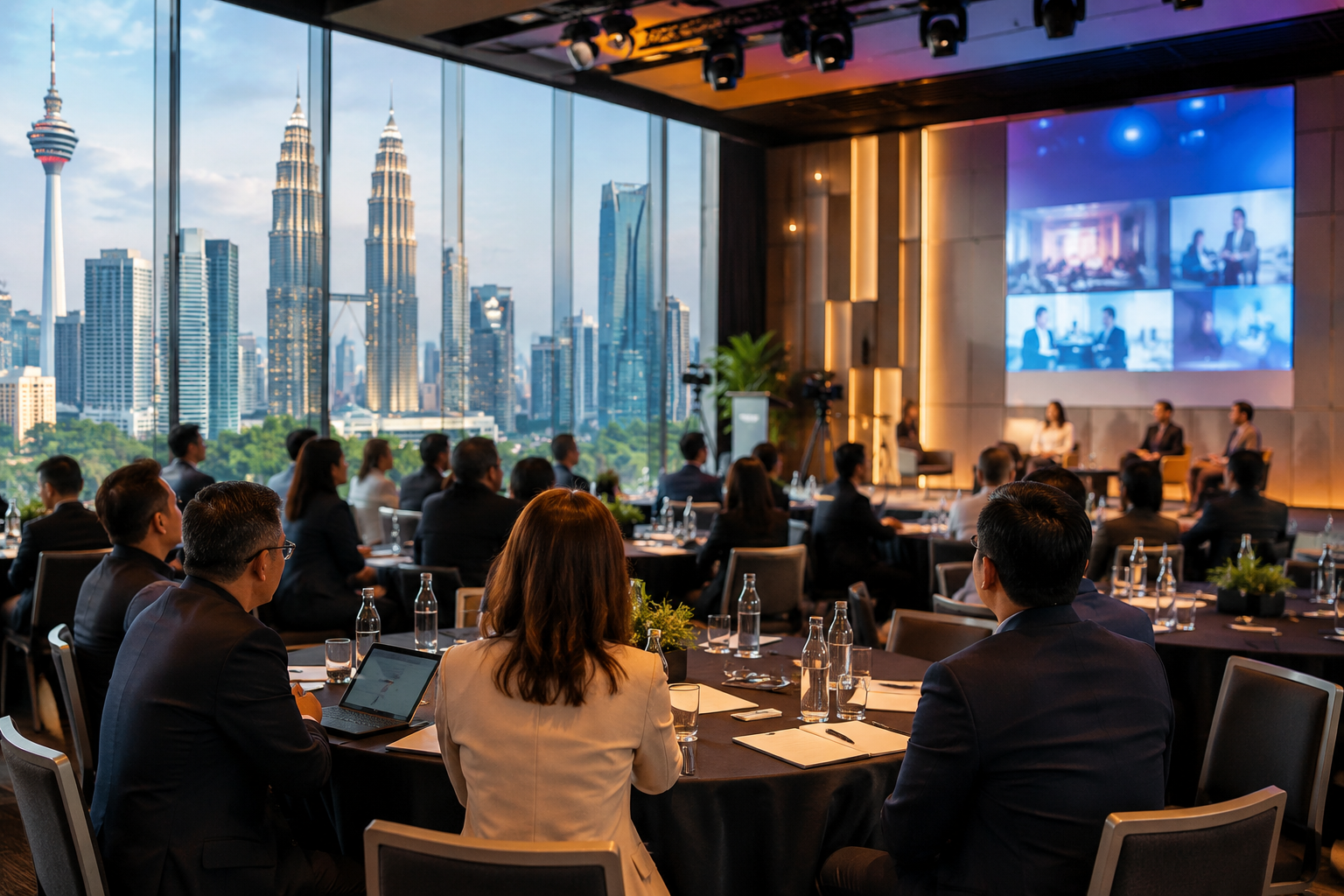
Fully in-person events remain common, but very few large conferences or launches skip a hybrid or livestreamed component entirely. Businesses have realised that a strong virtual layer extends an event’s reach well beyond the people physically in the room, often at a fraction of the cost of flying in every stakeholder.
Planning for this properly means treating the virtual audience as a real audience, with its own camera angles, pacing and interaction points, rather than a single static feed pointed at a stage. Agencies that still treat livestreaming as an afterthought tend to produce a noticeably weaker virtual experience than the in-room one.
Experiential Design Over Passive Presentation
Attendees increasingly expect to participate rather than simply observe. Interactive booths, live demonstrations and hands-on activities are replacing long stretches of one-way presentation, particularly at product launches and trade exhibitions where audience engagement translates directly into business results.
This shift also affects venue selection, with more businesses choosing spaces that allow movement and interaction over traditional theatre-style seating, even for formats that would once have defaulted to a lecture-style layout.
Sustainability Is Becoming a Real Line Item
Sustainability in event planning has moved from a nice-to-have mention in a pitch deck to a genuine budget consideration. Waste reduction, digital-first collateral over printed materials, and sourcing local vendors and produce are increasingly common requests from clients who need to answer for their event’s footprint internally.
Agencies that can speak specifically to these choices, rather than offering vague reassurances, have an advantage as more procurement teams add sustainability criteria to their vendor evaluations alongside cost and creative quality.
Data-Driven Measurement Beyond Attendance
Attendance numbers alone are no longer considered sufficient proof of an event’s value. Businesses increasingly want engagement data, lead quality, and post-event conversion figures, which means planning needs to build in measurement from the start rather than trying to reconstruct it afterward.
This has pushed more agencies to build reporting into their standard offering, rather than treating it as a separate, optional service that only gets requested after the fact.
Personalisation at Scale
Even large corporate events are borrowing techniques once reserved for smaller, high-touch gatherings, such as personalised agendas, targeted content tracks for different attendee segments, and tailored follow-up communications. Technology has made this more achievable at scale than it used to be, without requiring a proportional increase in staffing or planning time.
Smarter Use of Planning and Logistics Tools
More agencies are relying on digital tools to manage registration, seating, scheduling and vendor coordination in real time, rather than juggling spreadsheets across several people. This reduces the kind of small miscommunications that used to slip through during busy planning periods, and gives planners a clearer live view of an event as it comes together.
Wellness-Conscious Event Design
Long, back-to-back conference days are giving way to schedules that build in genuine breaks, more comfortable seating, and food options that don’t leave attendees sluggish through the afternoon. This reflects a broader shift in how businesses think about the guest experience, treating comfort as part of the event’s success rather than a secondary concern.
Culturally Relevant Programming
Kuala Lumpur’s multicultural audience means a growing number of businesses are building cultural sensitivity directly into event planning, rather than treating it as an afterthought. This shows up in practical choices, such as menu planning that accounts for dietary requirements across different communities, scheduling that respects religious observances, and programming that reflects the city’s genuine diversity rather than a generic international template.
Getting this right signals attentiveness to a Malaysian audience in a way that a purely imported event format doesn’t, and it’s an area where local experience tends to matter more than international polish alone.
What This Means for Businesses Planning Events in 2026
None of these shifts require abandoning what already works. They do suggest that businesses working with a corporate event planner in Kuala Lumpur should ask directly how an agency is adapting to each of these areas, rather than assuming every provider has kept pace.
An agency confident in its answers on hybrid capability, sustainability practices and measurement is usually a good sign that its approach has evolved alongside the industry, not just its marketing materials.
Final Thoughts
The businesses getting the most out of their events in 2026 are the ones treating these trends as practical planning inputs, not buzzwords for a pitch deck. Hybrid reach, real engagement, measurable results and genuine guest comfort are quickly becoming the baseline expectation rather than a differentiator.
SFK builds each of these considerations into how we plan events across Kuala Lumpur, adjusting the specific mix to whatever a client’s audience and goals actually call for.
Frequently Asked Questions
No. In-person attendance still drives the strongest engagement and networking value. Hybrid formats extend reach rather than replace the value of being in the room.
Common metrics include attendance versus registration, engagement during the event, leads generated, and post-event conversions, depending on the event’s original objective. These should be defined before the event, not afterward.
The scale of implementation can flex to budget, but the underlying principles, like clear measurement and genuine attendee engagement, apply just as much to a 50-person event as a 500-person one.
Building in measurement from the outset is usually the most accessible starting point, since it requires planning rather than a large additional budget.
Yes. A specific, concrete answer is a good indicator of an agency’s actual practice, while a vague or generic response is worth following up on.