Essential Skills Every Event Planner Needs
August 7, 2026
Great events rarely happen by chance. Behind every smooth conference, product launch or wedding is a planner who knows exactly how to bring dozens of moving parts together on time and on budget. Understanding the right skills for event planner work demands helps you know what to look for, whether you’re hiring a planner or building a career in the industry. It also explains why some events feel effortless while others, despite a bigger budget, still feel disorganised.
This guide walks through the core skills, plus the qualities that separate a good planner from a great one.
Core Skills for Event Planner Success
Certain skills show up again and again in job descriptions, portfolios and client reviews across the industry.
Organisation and Time Management
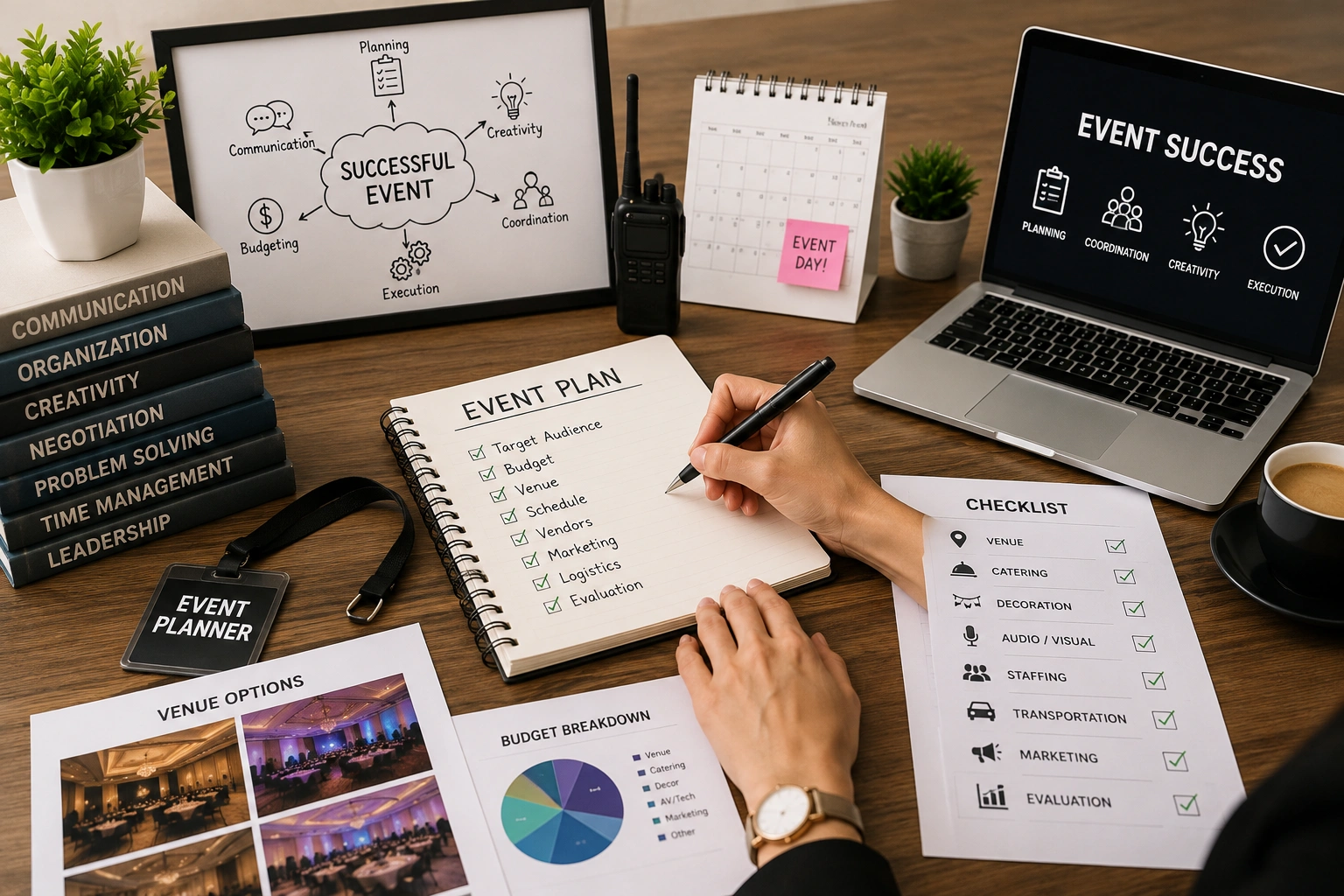
Every event is really a long list of deadlines running in parallel. Strong planners track vendor bookings, approvals, deliveries and rehearsals against a single master timeline, so nothing slips through the cracks in the final weeks.
Communication
Planners sit between clients, vendors, venues and on-site staff, translating one group’s needs into instructions the others can act on. Clear, frequent communication prevents the small misunderstandings that tend to snowball into last-minute problems.
Budget Management
Managing a budget is one of the most practical skills for event planner roles demand, since almost every decision, from venue to entertainment, comes with a price tag attached. Planners need to track spending in real time and know where there is room to flex if costs shift.
Problem-Solving Under Pressure
Something always changes on event day, whether it’s a late delivery or a technical glitch. The ability to think clearly and adjust a plan on the spot, without panicking the client or the guests, is often what defines a planner’s reputation.
Vendor and Negotiation Skills
Planners regularly negotiate rates, timelines and contract terms with caterers, venues and suppliers. Strong event coordinator skills in this area come down to building relationships that get better service and fairer pricing over repeat bookings, not just a lower price on a single invoice.
Creativity
Clients rarely want a carbon copy of someone else’s event. Planners need fresh ideas for themes, layouts and guest experiences that still work within the practical limits of the venue and budget.
Attention to Detail
Small details, like signage, seating charts and run-of-show timing, are what guests actually notice, even if they can’t say exactly why an event felt polished. Planners who catch these details before the event, rather than during it, save themselves a lot of stress.
Event Coordinator Skills vs Event Planner Skills
The terms are often used interchangeably, but there is a practical difference. Event coordinator skills tend to focus on execution: managing the run-of-show, briefing staff and handling on-site logistics on the day itself.
Event planning, by contrast, usually starts much earlier, covering strategy, budgeting, vendor selection and design. In practice, many professionals do both, moving between planning and coordination depending on the size of the event and the team around them.
Qualities of a Great Event Planner
Skills can be learned, but certain qualities of an event planner are harder to teach and tend to separate the best in the industry.
- Calm under pressure, even when several things go wrong at once
- Genuine curiosity about clients’ goals, not just their guest list
- Adaptability when a plan needs to change with little notice
- Reliability that clients and vendors can count on without chasing
- A client-first mindset that puts the event’s success above ego
Teams at established agencies like SFK build their planning process around exactly this mix of skills and qualities, pairing experienced planners with dedicated production and design specialists so no single person is stretched too thin. It’s a useful reminder that even the strongest individual planner works better as part of a properly resourced team.
How to Build These Skills Over Time
Most planners don’t arrive with every skill fully formed. Organisation and budget discipline can be picked up through structured processes and checklists, while communication and negotiation tend to improve with repeated, real client and vendor interactions.
The fastest way to build these skills is usually hands-on experience, starting with smaller events and gradually taking on more complex ones. Shadowing an experienced planner, asking for feedback after each event and reviewing what went wrong, not just what went right, all speed up that learning curve considerably.
Final Thoughts
Strong event planning comes down to a practical mix of organisation, communication and budget discipline, backed by the right qualities of an event planner: calm, adaptability and genuine care for the outcome. Whether you’re hiring a planner or developing these skills for event planner work yourself, this combination is what turns a stressful project into an event that runs itself. As a premier event management agency in Malaysia, SFK doesn’t just deliver logistics; they embody the very qualities that define great event planning. Their planners remain calm under pressure, pivot seamlessly when plans change, and take genuine ownership of every outcome, whether it’s a small activation or a large-scale conference. By partnering with us, you gain access to a team that already lives these skills, allowing you to focus on your brand while they ensure your event runs so smoothly it almost feels like magic. In other words, we’ll transform the ideal qualities of an event planner into a reliable, real-world advantage for your business.