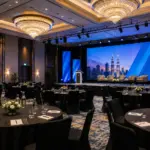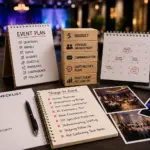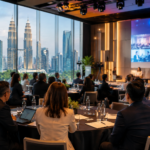

Why Businesses in Kuala Lumpur Hire Professional Corporate Event Planners
August 12, 2026
A decade ago, many companies handled events using whichever staff member had the most spare time and the most patience for spreadsheets. That approach still exists, but a growing number of businesses in Kuala Lumpur have moved away from it, choosing to bring in a dedicated corporate event planner in Kuala Lumpur instead.
This shift isn’t about convenience alone. It reflects a genuine calculation about time, risk and the return a well-run event can generate for a business, one that becomes clearer the more events a company runs each year.
The Real Cost of Managing Events In-House
Running an event internally rarely shows up as a single line item, which is part of why it’s easy to underestimate. Staff time gets pulled away from their regular responsibilities for weeks at a stretch, often without a corresponding reduction in their usual workload, which means the event’s true cost is spread quietly across other projects that slow down as a result.
There’s also the cost of inexperience. A team planning its first large conference or product launch is learning many lessons for the first time, often at the client’s or the audience’s expense, whereas an experienced agency has already solved most of those problems on someone else’s event, sometimes several times over.
Why Kuala Lumpur Businesses Choose Professional Support
Time Savings for Internal Teams
Outsourcing event logistics frees internal staff to focus on their actual roles, whether that’s marketing strategy, client relationships or day-to-day operations, rather than spending weeks chasing vendor quotes and floor plans.
Access to Established Vendor Networks
Agencies bring existing relationships with venues, caterers and production suppliers built over repeated bookings. This usually means better rates, more flexible terms, and faster responses when something needs confirming quickly, especially in the final weeks before an event.
Stronger Risk Management
Professional planners have typically seen most of what can go wrong at an event, from vendor no-shows to technical failures, and build contingency plans accordingly. That experience is difficult to replicate on a first attempt, no matter how organised the internal team is.
Higher Creative and Branding Standards
In-house teams are rarely design specialists. A corporate event planner in Kuala Lumpur with dedicated creative capability can deliver branding, staging and guest experience design that feels considered rather than improvised, which matters more than most businesses expect once guests are actually in the room.
Scalability As Events Grow
An agency that has managed events of varying sizes can scale a plan up or down without starting from scratch, which matters as a business’s events grow from a 50-person briefing to a 500-person conference over just a few years.
In-House vs Agency: A Quick Comparison
- Speed of setup: in-house teams start from scratch each time, while agencies reuse proven processes and vendor relationships
- Cost visibility: in-house costs are often scattered across departments, while agency quotes are typically itemised upfront
- Risk exposure: in-house teams learn from mistakes as they happen, while agencies bring contingency planning from prior events
- Design quality: in-house output depends on whoever is available, while agencies bring dedicated creative specialists
- Scalability: in-house capacity is fixed to current staff, while agencies flex resourcing to the size of the event
When It Makes Sense to Keep Planning In-House
Outsourcing isn’t automatically the right call for every event. Small, low-stakes internal gatherings, such as a regular team lunch or a simple briefing, rarely justify agency fees. The calculation shifts once an event involves external guests, media attention, significant budget, or reputational stakes that a misstep would actually damage.
How to Make the Transition Smoothly
Moving from in-house planning to an agency partnership works best as a gradual handover rather than an abrupt switch. Starting with a single, well-defined event, rather than immediately outsourcing your entire annual calendar, gives both sides a chance to establish trust and working rhythm before more is at stake.
It also helps to be upfront with your internal team about what’s changing. Staff who previously owned event logistics should understand that the shift frees them for higher-value work, rather than feeling their role is being replaced, since a smooth internal transition tends to produce a smoother external one with the agency as well.
What Growing Businesses Gain From the Right Partner
As a company’s events grow more frequent and more varied, in-house teams often start needing capabilities they don’t have on staff, whether that’s a product launch event agency for a new release or exhibition specialists for a trade show appearance. Businesses that build a relationship with one full-service partner, like SFK’s own product and media launch work, tend to avoid the inefficiency of onboarding a new agency for every new event type.
That consistency also compounds over time. A partner who already understands your brand, your stakeholders and your usual audience needs far less onboarding for each new project than a new vendor would, which shortens planning timelines considerably on repeat engagements.
Final Thoughts
Hiring a corporate event planner in Kuala Lumpur is rarely about handing off work you don’t want to do. It’s a decision to protect your team’s time, reduce operational risk, and raise the standard of what your brand puts in front of clients, staff and partners.
SFK works with businesses across Kuala Lumpur at exactly this stage, helping teams decide what to keep in-house and what’s worth handing to a dedicated partner.
Frequently Asked Questions
Once events start involving external stakeholders, meaningful budgets, or reputational risk, most businesses find the cost of a professional planner is offset by the time saved and the risk avoided.
No. Most agencies scale their involvement to the brief, supporting anything from a small press briefing to a large-scale conference or public activation.
A good agency works from your brief and keeps you involved at every decision point. Outsourcing execution doesn’t mean giving up direction, it means having a professional team carry out your vision.
If your team is missing deadlines, stretched across too many priorities, or lacking specialist skills like stage production or exhibition design, those are strong signs it’s time to bring in support.
Yes. Most engagements work as a partnership, with the agency handling logistics, design and production while your internal team retains strategic direction and stakeholder communication.