Common Corporate Event Planning Mistakes and How to Avoid Them
August 19, 2026
Most event planning mistakes aren’t dramatic. They’re small oversights, a missed approval, an unclear brief, a vendor booked too late, that quietly compound until they show up as a visible problem on the day itself. Recognising these patterns early is usually enough to avoid them entirely.
Here’s a rundown of the mistakes we see most often, along with the fixes any corporate event planner in Kuala Lumpur would recommend before your next event.
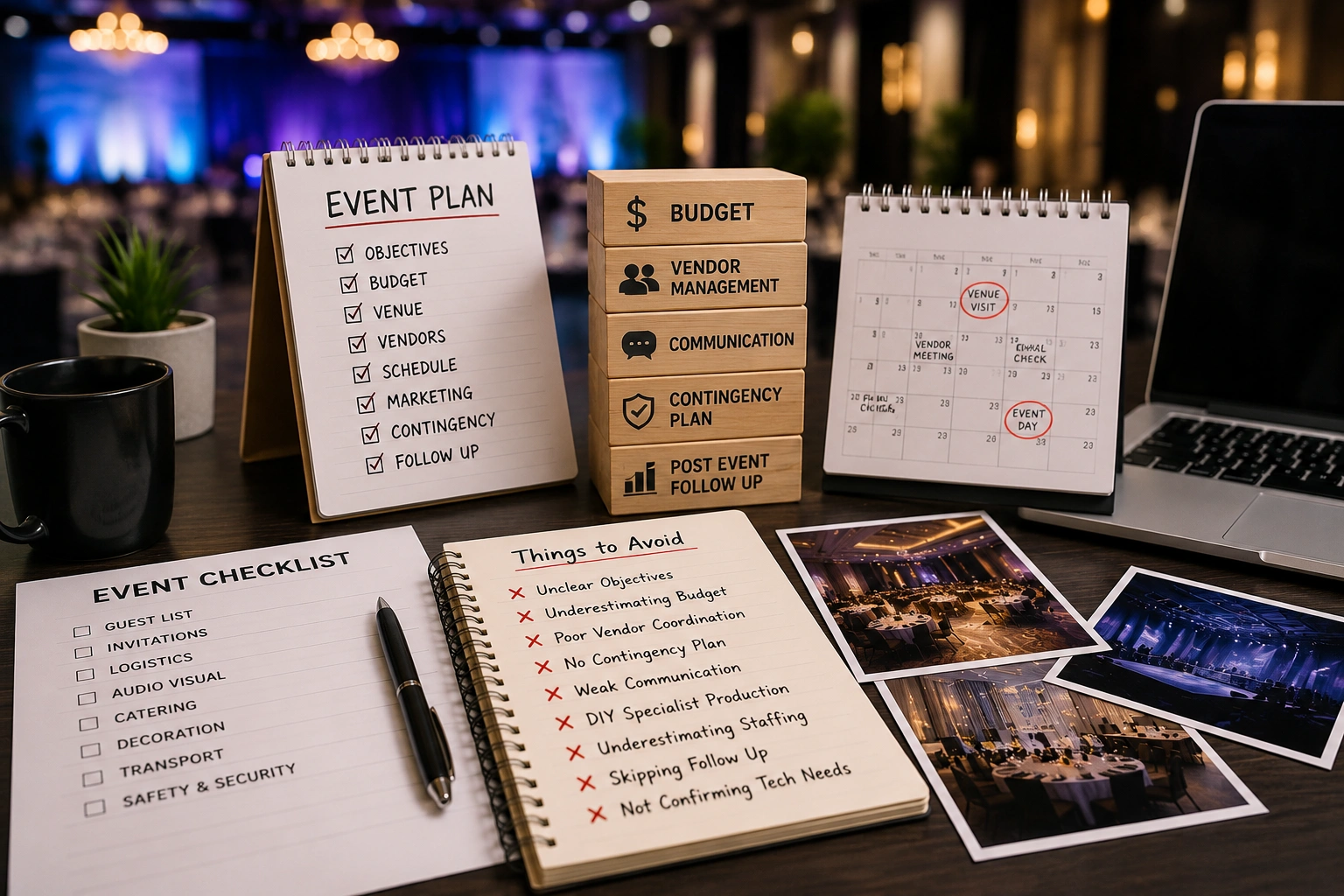
Mistake 1: Starting Without Clear Objectives
Jumping straight into venue and vendor decisions without agreeing on what the event actually needs to achieve is one of the most common early mistakes. Without a defined objective, whether that’s generating leads, celebrating a milestone or launching a product, it becomes difficult to make consistent decisions later, and even harder to judge whether the event actually worked.
Before making venue or vendor decisions, businesses should understand the key components of event management to ensure every major part of the event is properly planned.
The fix: Agree on one or two clear objectives before booking anything, and revisit them whenever a decision feels unclear.
Mistake 2: Underestimating the Budget
Budgets that only account for the obvious costs, venue, catering, entertainment, tend to run into trouble when smaller expenses like signage, transport, insurance or last-minute rentals start adding up. A budget with no contingency buffer leaves no room to absorb these surprises.
The fix: Build in a contingency of at least 10 to 15 percent, and get itemised quotes rather than working from rough estimates.
Mistake 3: Poor Vendor Coordination
Booking vendors independently, without a single person tracking how their deliverables fit together, often leads to gaps that only surface on the event day itself, such as a stage built before the AV team confirms power requirements. Miscommunication between vendors is rarely anyone’s fault directly, but it’s always someone’s problem to fix.
Working with an experienced team can also reduce communication gaps and keep multiple suppliers aligned. Understanding the benefits of hiring a corporate event planner can help businesses decide when professional support makes sense.
The fix: Assign one coordinator, whether internal or from your agency, who tracks every vendor’s timeline and confirms dependencies between them ahead of time.
Mistake 4: Ignoring Contingency Planning
Assuming everything will go to plan is a comfortable assumption right up until it doesn’t. Weather changes, technical failures and last-minute cancellations are common enough that not having a backup plan counts as a planning gap, not bad luck.
The fix: Identify your event’s most likely risks in advance, such as an outdoor activation facing rain, and agree on a specific backup plan for each one before the event, not during it.
Mistake 5: Weak Guest Communication
Guests who receive unclear instructions about timing, dress code or logistics tend to arrive confused, which creates avoidable friction right at the start of an event. This is especially costly for events where a strong first impression matters, such as a gala dinner or a product launch event.
The fix: Send clear, concise instructions well ahead of the event, and follow up with a short reminder closer to the date covering only the essentials.
Mistake 6: Trying to DIY Specialist Production
Stage production, exhibition booth design and large-scale AV setups look simpler from the outside than they are to execute well. Businesses that attempt these in-house, without the right equipment or experience, often end up with a result that looks noticeably less polished than a specialist would deliver, sometimes at a similar or higher cost once mistakes get corrected.
The fix: Bring in specialists for technically demanding elements, such as a trade exhibition booth company for exhibition work or a product launch event agency for a major release, even if the rest of the event is managed in-house.
Mistake 7: Underestimating On-Site Staffing Needs
A common mistake is assuming the existing team can manage registration, guest assistance and troubleshooting on top of their usual roles during the event itself. This usually results in longer queues, slower problem resolution and a visibly stretched team.
The fix: Plan staffing levels around guest volume specifically, not around who happens to be available that day, and bring in temporary event staff where numbers genuinely require it.
Mistake 8: Skipping Post-Event Follow-Up
Once the event wraps up, it’s tempting to consider the job done. Businesses that skip a structured follow-up, thank-you notes, feedback surveys, a summary report, miss the chance to capture lessons and maintain momentum with the guests who attended.
The fix: Set aside time within the first week after the event for follow-up communication and an honest internal debrief on what worked and what didn’t.
Mistake 9: Not Confirming Technical Requirements in Advance
Assuming a venue’s power supply, internet bandwidth or AV equipment will simply be sufficient is a common and costly assumption. Problems here often surface only once equipment is being set up, by which point there’s little time left to source a fix.
The fix: Confirm technical specifications directly with the venue well before the event, and have a backup plan for anything mission-critical, such as a second internet connection for a livestream.
How to Catch These Mistakes Before They Happen
Most of these issues share a common root cause: decisions made in isolation, without checking how they affect other parts of the event. Building in a few structured check-ins throughout the planning process, rather than one big review right before the event, tends to catch these problems while there’s still time to fix them cheaply and quietly, long before a guest ever notices.
Final Thoughts
None of these mistakes are unusual, and none of them are difficult to avoid once you know to look for them. Clear objectives, a realistic budget, coordinated vendors, a contingency plan and the right specialist support cover most of what separates a smooth event from a stressful one.
SFK builds each of these checks into how we manage events across Kuala Lumpur, precisely because we’ve seen what happens when they get skipped.
Frequently Asked Questions
Starting without clear objectives tends to cause the most downstream problems, since it makes every later decision harder to evaluate.
A buffer of 10 to 15 percent of the total budget is a reasonable standard for most corporate events, adjusted upward for events with more moving parts or tighter timelines.
They’re far less likely with an experienced planner, but no event is entirely risk-free. The difference is usually in how quickly and calmly an experienced team responds when something does go wrong.
Often, yes. Bringing in a specialist for one technically demanding element, such as exhibition design or AV production, while managing the rest internally is a common and cost-effective approach.
Ideally, alongside the very first planning stages, rather than as a separate step closer to the event date. Identifying risks early gives you more options for addressing them.